Category Archives: Office Trends

Hybrid Work Life: A Clash of Both Worlds

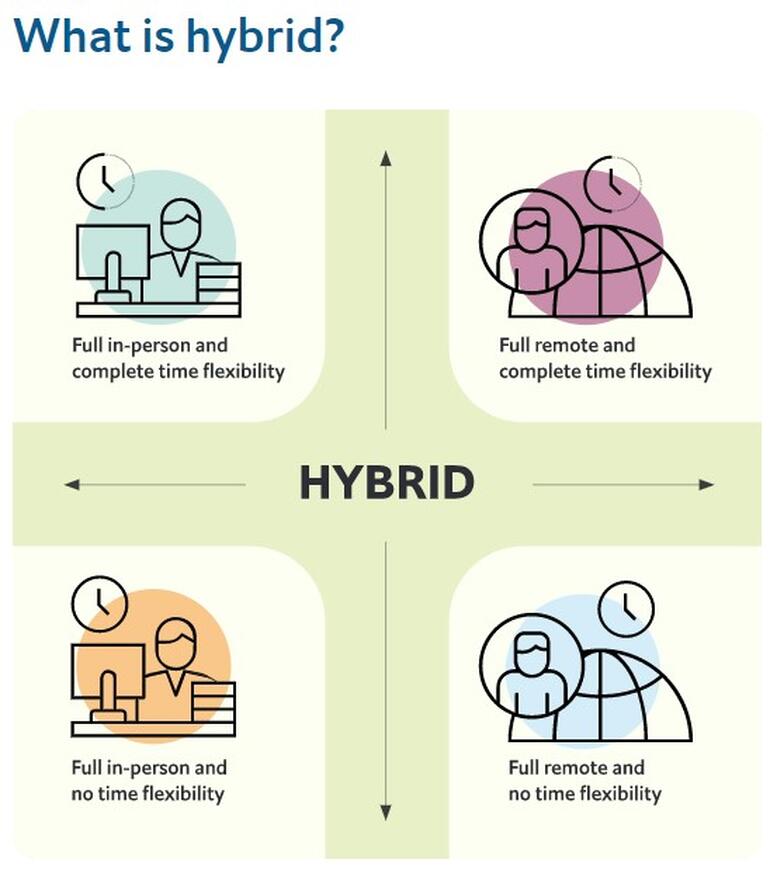
In a new report from Google Workspace, hybrid work means anything between full in-person work with limited time flexibility and full remote work with complete time flexibility.

Image: Google Workspace

Keeping in touch with colleagues while simultaneously working remotely can be trouble in some cases that may include Internet lagging, a decrease in networking between senior colleagues and newcomers, and a negative impact on mental health. Corporate worlds have been discussing whether remote work or all-in-person is better. Obviously, there’s a flip side to every coin. According to two new polls, businesses are gradually transitioning to hybrid. New research from Google Workspace and Kaspersky uncovers a plethora of inconsistencies in how individuals perceive hybrid work. A sizable number of employees prefer remote work, but another fraction is concerned about how to network in such an environment.

“Remote work appears to have improved my physical, social, and emotional well-being as an individual, but it has been affecting my relationship with the organization,” said Prasad Setty, vice president of digital work experience at Google Workspace.

For some employees, the trade-off is beneficial, according to the data by Kaspersky’s research, which found that 61% of employees do not feel secluded while working remotely. In addition, 37% of respondents stated communication with coworkers is better now than it was before the outbreak.

According to Setty, the poll found that just a tiny fraction of people are expected to be fully in the office or completely remote.

“75% expect hybrid to be the default option for us and the complications in the responses demonstrate people’s point of view and personal preferences,” he said.

The new task for leaders is to devise a collaboration tech stack that complements that balancing stack. Collaboration tools must be usable by all workers in all contexts. It’s a balancing act that necessitates fresh managerial abilities and a willingness to try new things. In 2022, there will be an aim to a balance between flexibility and efficiency for remote workers and networking and team development in person.

Here are some ideas from both reports that can be used to develop a hybrid plan for 2022.

The Formula to a Successful Hybrid

Views have altered to the point that the office is no longer the general place to perform work According to Google Workspace’s research, “Making hybrid work human”. The researchers cite the following explanations for this shift:

  • Some remote work experiments will bear fruit.
  • Setting up the technologies in-home office is more convenient now.
  • The public’s perception of remote work has been positively accepted.

There are three benefits of working in a flexible workspace. The top three benefits are an increase in productivity, good well-being, and alternative ways of working. On the other hand, the top two downsides of working from home, according to those who struggled with it, were productivity and welfare.

Several survey findings reflected this sense of disconnection:

  • 62% percent are concerned about their future job possibilities as a result of fewer opportunities to network and create relationships with senior leaders. 
  • 57% of respondents reported feeling detached from their workplace and colleagues.
  • 53% reported that lack of interactions have caused an impact on their mental health

The study was carried out by Economist Impact researchers and was sponsored by Google Workspace. There were 1,244 survey respondents from North America, Europe, APAC, and Latin America, representing more than 15 industries and both small and large enterprises. As stated in the report, hybrid work is defined as any combination of full in-person employment with limited time flexibility and full-time remote work with complete time flexibility.

Making Collaborative Tools Suitable for Hybrid Work

Based on the poll, according to Setty, demonstrates the necessity for collaborative tools and hybrid work arrangements to achieve these three criteria:

1) Work is no longer linked to a particular spot.

2) Time management is essential.

3) Autonomy, flexibility, and human connection are all required.

Google Workspace’s Companion Mode, considers hybrid settings, as having some participants in a conference room and others virtually joining.

“Participants in a conference room can use hand raises, make remarks, and participate in polls without interfering with everyone else through companion mode,” he explained.

Setty believes that defining clear targets and critical results on a quarterly basis is the key to success when introducing flexible work hours.

“That way, everyone knows who is going to do what and when the team will meet to go through everything,” he explained.

To adapt from the shift work to remote work with ease, Setty said he reduced his weekly, 90-minute staff meeting to two 30-minute sessions in order to have more opportunities to check in with his team.
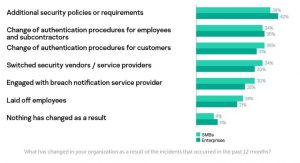
A survey by Kaspersky found that companies are using a variety of tactics to boost cybersecurity as many people continue to work from home.

Image: Kaspersky

A new survey found that most employees have successfully adapted to remote work. According to Kaspersky’s poll of 4,303, IT workers from 31 countries found that 61% of employees do not feel alone while working remotely. In addition, 37% of remote workers claimed they are communicating with their coworkers even better now. Nonetheless, a significant proportion — 39% of them feel secluded while working from home.

Based on the survey:

  • 54% percent of employees reported an increase in workload as a result of remote work.
  • 61% of employees reported no difference in communication with their teams while working remotely.
  • 80% of businesses have attempted to address employee burnout, while 45% have developed solutions that genuinely help to reduce workload.
  • 42% of SMBs and 43% of businesses have encountered IT security breaches.
  • 45% prefer not to publicly report disclosures of confidential employee info.

People continue to utilize non-corporate devices and services for everything from email to resource planning software to web-conferencing platforms, despite the fact that use of each of these services has increased by only approximately 3% in the last year. Respondents to the survey also mentioned the following security concerns about working remotely:

  • One of the most significant challenges, according to 42% of respondents, is a lack of end-user security culture.
  • 42% of firms have come across inappropriate usage of IT resources by employees.
  • 38% of businesses reported unauthorized data sharing via mobile devices.

In the report companies, Andrey Evdokimov, Kaspersky’s head of information security stated that firms must evaluate the worth of the information as well as the number of people who have access to it, in addition to precautionary measures.

“Breach of incidents are more prone to occur in businesses where a significant number of workers handle classified info that can be sold or used in some way. Change business operations if necessary, by lowering the number of people who have access to essential data, reducing the amount of data available to all employees, and making available information less enticing for theft (, eliminating the last digits of a credit card number, anonymizing data and so on).” As said by Evdokimov.
Setting The Ideal Home Office For Success

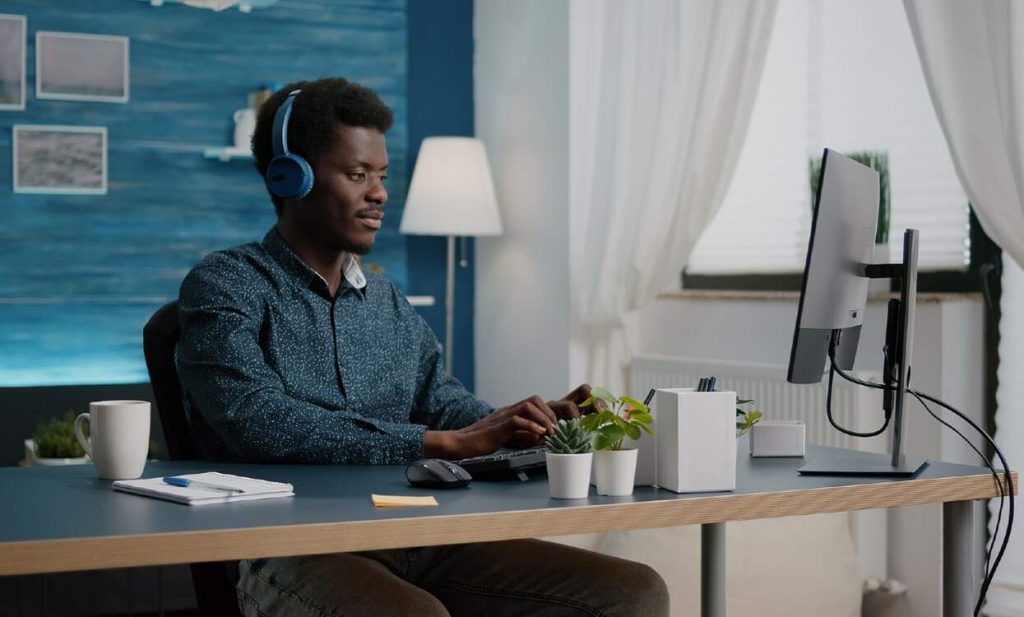
Since the pandemic hit, we’ve all had to adjust to new ways of living, working, and learning for almost two years now. While it was challenging and puzzling at first, we can’t deny that some parts have become the norm. In this article, you will learn about strategic remote work and selecting the right tools to achieve your ideal working space at home. By the time you’ve finished reading this, you’ll know how to create a productive home office environment to boost your working efficiency to another level.


We strive to advance and evolve as humans in order to make our life simpler. Technology has always played an important role in this. Although COVID-19 did not dramatically affect the workplace regulations, it did speed up the procedure. The perfect example would be activity-based work, in which you choose where you work based on the nature of what you’re doing. It’s a term that’s been around for a while, but its popularity is booming.

Strategic Remote Work

Working from home will continue to be an alternative in many businesses. Indeed, several of the world’s greatest corporations intend to keep remote work as long-term strategic planning, prompting homeowners to consider the optimal setup for their home office space. Prior to crafting a dynamic working space, architects and developers are designing homes with particularly innovative setups of home office rooms including versatile designs to allow the ease of working and learning without having many distractions.


Back then, a home office wasn’t as necessary as compared to this day and age, although in this case, this is true for new constructions and retrofits. The standards for these areas may differ depending on whether the project is led by the homeowner or their organization. To create a sufficient setup, homeowners commonly request a desktop solution that combines home control and audio conferencing, with the use of a separate video camera when necessary.


Certainly, this option has clear advantages, as it allows the homeowner to control the volume of the music or raise the shades from the same device from which they are taking a business call. The standards are different if the home office is handled by the corporation. As much as the corporation wishes to assist its employees in overcoming virtual meeting fatigue by offering handy devices, this also means that they now have a rapid number of technology and spaces to maintain, without the help of the IT staff to manage the resources.

Selecting the Right Tools

Companies want to ensure that they can remotely provision, monitor, and control devices throughout their whole enterprise, including home offices. And, more often than not, they want a device that allows you to join the company’s preferred collaboration tool, such as Microsoft Teams, Google Meet, Zoom, and the likes of it. Therefore, businesses are frequently searching for a steady device that is always on and ready, allowing employees to view their Teams calendar and attend meetings with a single click while working from home. Employees who work from home must be equipped with technologies that allow them to stay connected and engaged with their coworkers. That being the case, employees can enjoy a consistent experience throughout their workday with the correct IT platform.


Organizations must encourage their employees to perform efficiently with a reliable technology standard from wherever they choose to work, whether in the office or from home. As a matter of course, creating the ideal home office entails more than just finding the proper technology. Natural sunlight will improve your mood and help you function positively.  Background distractions should be avoided in order to keep employees’ attention focused during video calls. Furthermore, sufficient tablespace should be provided so that workers can conveniently spread-out equipment, papers, and other necessary documentation for their day-to-day tasks.


Even though you may still move around freely as compared to the actual office, it’s important to note that while working from home, you should have a comfortable office chair that won’t cause you body pain. The office chair should maintain the body forward, the shoulders back, and the lower back supported. Due to the current surge in home office demands, if you are a residential installer, it is worthwhile to survey the benefits and expectations of homeowners in these areas. Essentially, the hybrid workforce is here to stay, so missing out on this opportunity would be a shame.

Guides to Home Office Furniture for a Healthier Lifestyle

After living through a pandemic for over a year, most of us have grown accustomed to working from home. We all know what works for us at this point, notably the value of quality furniture and its significant effects on our well-being. Before setting up your dynamic workspace, you will need to visualize the ideal furniture to create a multi-dimensional home office that will keep you motivated and unwind when you need to.

COVID-19 has also caused us all to rethink our work pattern, sparking a fundamental debate about whether we can work entirely online or if we require a physical workplace. In any case, the trend of working from home will most definitely continue to some extent. Clearly, this raises a whole new set of issues when it comes to defining the workplace.

With the possibility that working from home may become the “new reality,” we must focus our attention on the physical and emotional environment at home.

This involves creating a comfortable workspace for your home office and prioritizing your physical and emotional well-being. A good working environment is essential for restoring productivity in work-from-home circumstances.

A suitable arrangement also ensures increased productivity and focus levels, whereas an improper setup can have a negative impact on health and work life. According to a study conducted by UpRight and Ernst & Young, up to 75% of study participants were more productive when they practiced improved posture, which was linked to having better ergonomic furniture.

The benefits of properly selecting the right office furniture are not restricted to the home environment. If you are an employer, you may want to evaluate the furniture in your present office in order to better cater to your employees’ working requirements and well-being. As they begin to return to the actual working space, this could be a nice approach to welcome them back.


Overall set-up

One of the first things you should think about when designing your home office is where to put your desk, chair, and other work furniture including equipment. If you live alone and don’t have much room, your living or dining area could be a simple place to convert into a home office. If there are other people in the house, you must ensure that possible distractions can be minimized as much as possible. So, if doable, choose a space that is more private than a living or dining room and that people may visit less frequently. 

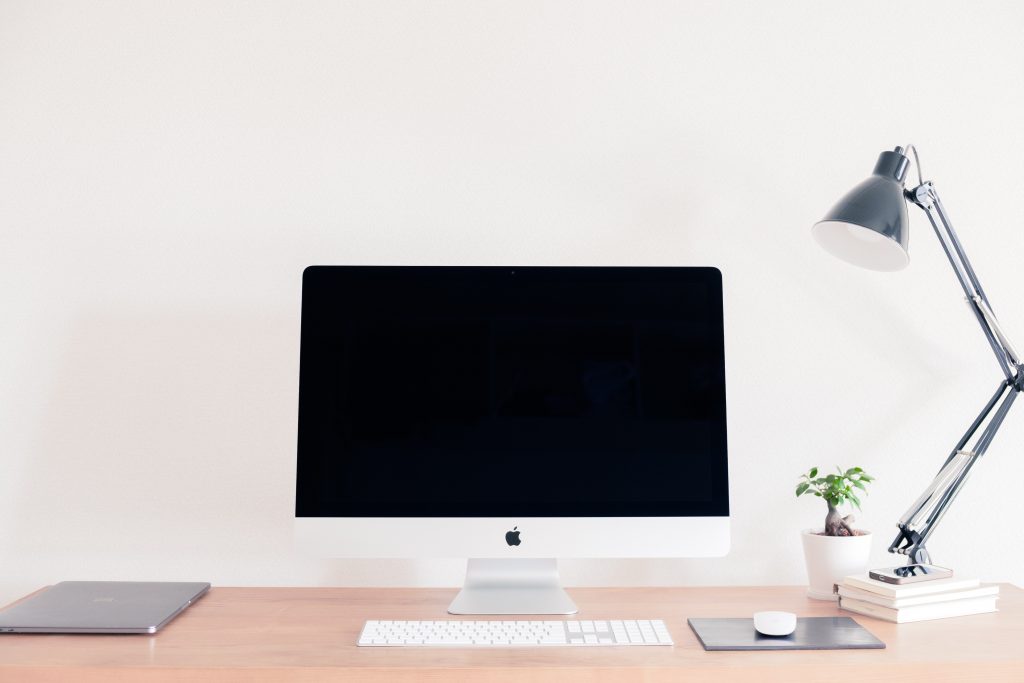
Set up against a neutral background, such as a wall, because you may be asked to attend a number of video conferences while working from home! Make an effort to set up in a well-lit place. A window on the side of your workspace will provide natural light while not interfering with your screen visibility. Daylight will not only brighten your home but will also make you feel more active and determined. Otherwise, make sure there are additional overhead lights or utilized table lamps in the area.

Adding indoor house plants to your working environment can also be quite therapeutic. Plants can enhance productivity, reduce stress, improve attention, boost the ambiance, and encourage creativity. It’s proven to lift up your physical and mental health. A touch of flora will provide hue and vibrancy to your workspace, making it far more aesthetically pleasant and lively.


1. Relief and posture

When choosing furniture for your home office, make sure to leave as much flexibility for adjustment and mobility as preferably by you. For example, choose a sit-stand desk that you can change in height or a computer monitor arm that allows you to adapt the screen’s position to your eye level. If you’re working on your dining table and have a very compact space for a desk, there are furniture solutions that you can add on top of any table surface to make it a standing desk.

Choosing a comfy chair for your home office can also help to promote good posture. A chair with a high-quality backrest, adjustable height, armrests, and lumbar support is excellent. Integrating this type of furniture will aid in the lessening of backache problems that you may otherwise experience. Make long-term decisions about your home office furniture because it has a major influence on your physical health.

2. Space & productiveness

If you have limited room and prefer to work in your living area, choose furniture that is readily tidied and offers efficient storage options. This allows you to quickly regain your dining table for supper with your family or simply reclaim your home space during the weekend without having to think about work all the time.

If this is the case for you, choosing furniture that you can fold up and store conveniently after you are finished working may be a practical option. When volume and weight are taken into account, lightweight goods are considerably easier to manipulate. This will assure that your versatile workspace functions well and that there isn’t a lot of clutter around your house or office.

3. Physical fitness & health

You might lose track of exercise if you work from home. The day passes you by before you even realize it, and even when you do pause to relax, time is frequently hijacked by minor household duties here and there. Furthermore, because you work from home, commuting to and from your office is eliminated, as it’s the exercise that keeps you healthy (even if it was only a 10-minute stroll!). In this instance, it is critical that you incorporate some activity throughout your day when working long hours.

If you’re short on time, why not juggle your tasks and workouts? You may try using an exercise ball as a chair or putting a treadmill under your desk. Walking during a call, for example, may simulate a “virtual walking meeting” and discreetly improve your physical health without taking any of your precious additional time!


What employers can do to help

There are numerous other home office furniture ideas to consider in addition to those described above, such as inventive storage solutions and smart designs for adjusting to limited areas! The most crucial factors to consider are flexibility, movement, and multi-functionality. In essence, the guides presented above can be used in collaborative workplaces. 

If you are an employer trying to improve your employees’ office environment once they return to work, attempt to integrate ergonomic, high-quality furniture. Not only will this safeguard your employees’ well-being, but will also offer creative solutions that allow them to modify their work dynamics. Office furniture is crucial in creating an efficient, happy, and healthy work atmosphere for individuals who use the area.

Importance of good home office for excellent well-being

Working consumes a significant chunk of our adult lives. Given the amount of time and effort that goes into a regular work week, a proper working environment is essential. Particularly in light of the current outbreak, where working from home and remaining safe is vital. This, however, should not be at the expense of your health and well-being. Investing in the establishment of a nice home office can drastically improve your working life, whether your issues are due to restricted space, distractions at home, or anything else!