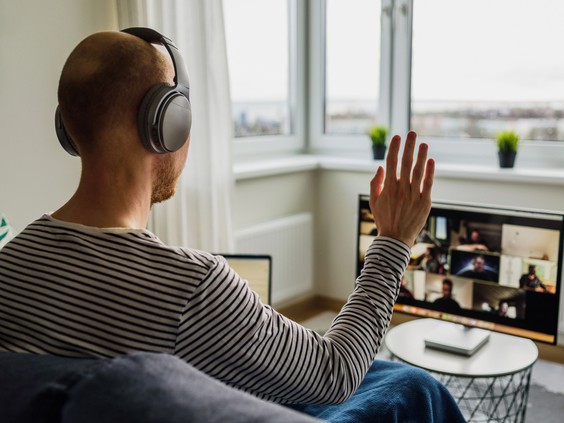
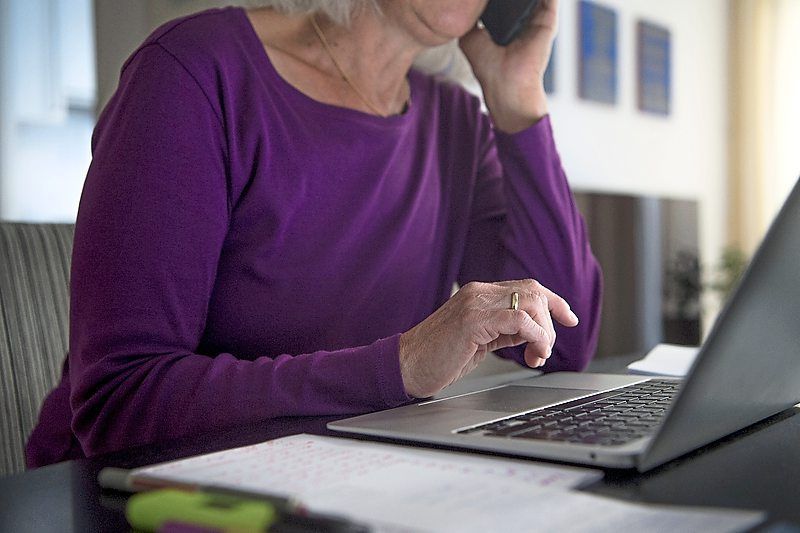
Finding the ideal work-life balance can be difficult. Undermanaged remote employees may experience job frustration, burnout, or even fraud.
There is a saying that goes, “distance makes the heart grow fonder.” Perhaps it’s a matter of “out of sight, out of mind”? Long hours of forced remote working, be it from home or virtually elsewhere, have proved that for any group of employees, both can be true at times.
Working from home during the outbreak weakened professionals’ relationships to the consultancies, law firms, or accounting companies that employed them, according to a recent Financial Times research. With most parts of the world finally loosening their lockdown, many have been actively job-hopping because candidates could now interact face to face with prospective employers.
A decrease in commitment toward employers
There are two sides to this situation. First, the seclusion of remote working decreases commitment to your current employer; second, the return of in-person interactions pushes you to establish a bond with a new one.
On the other hand, The Financial Services Culture Board’s efforts fall into the “absence makes the heart grow fonder” camp. Its 2020 study of thousands of Britain banking employees showed increases in scores for feedback, leaders’ transparency, and health.
These scores dipped significantly this year, although they remained higher than in 2019. According to Jenny Robinson, a senior behavioural scientist at the FSCB, believes that employees may have felt more “equipped to utilize their judgment and autonomy” when working remotely.
Then there’s the Oliver Wyman Forum survey, which discovered that a drive for more flexibility and a better work-life balance, instead of a desire to return to the office, is significantly one of the reasons for resigning or wanting to leave a job, after the quest for earning more money. Finding the ideal work-life balance can be difficult. This is because disorganized management of remote employees may experience job frustration, burnout, or even fraud.
Another survey conducted this year by the Chartered Institute of Internal Auditors identified the potential of a “post-pandemic organizational cultural problem.” “How do employees maintain their strong attachment to the business, continue to experience the shared purpose, values, and sense of community within their organization, and maintain expected behaviours in the absence of the old workplace-in-person conversations?” asked Heli Mooney, Ryanair’s head of internal audit.
Returning to the office as a senior and new personnel
Depending on where your position is in the hierarchy, the office will either repel or attract you. Robinson distinguishes two “humps” that reflect senior management and junior subordinates or interns.
They are more eager to return to the office than the rest of the staff. “How much of a component of an organization does someone feel if their inclusion consists of a keyboard transfer in a parking lot?”, a manager told FSCB what it meant to work in a company with “no unifying cultural aspects,”
“How much of a part of their organization does someone feel if their inclusion consists of a keyboard transfer in a parking lot?”
According to the FSCB, there is a distinction between connection, which technology supports during the lockdown, and collaboration, which is rather challenging. It is difficult to recreate processes that bind in new hiring or junior personnel, such as desk-side learning from experienced employees, online. It’s one of the reasons why investment banks, which place a high value on such tactics, have led “back to the office” campaigns.
Changes influencing the current labour market
Indeed, the after-effects of the outbreak have changed most organizational cultures and their point of view. Kevin Rockmann, a management professor at George Mason University in Virginia, says it’s not unusual that this is causing ripple effects in the labour market. Not everyone who was delighted with their employment prior to the pandemic will be happy after it.
In a 2015 paper for the Academy of Management Discoveries magazine titled “Contagious Offsite Labor and the Lonely Office,” Rockmann and Michael Pratt of Boston College analyzed the unexpected implications of remote work at an unnamed technology company. One major finding was that once a percentage of employees preferred to work remotely, the quality of work in the office declined. Staff members felt “alone in a crowd, surrounded by many but not getting actual social contact in the on-site workplace,” thus many preferred to work off-site.
It’s a feeling where you’ve decided to return to the office anticipating meeting your colleagues only to find out that they’ve chosen to work from home on that day.
Employers and employees, like their counterparts in 2015, may have to make choices as they try to reverse the flow of remote work, according to Rockmann. “This will cause some turbulence,” he predicts. It is acceptable to experiment, he argues, but businesses must eventually “stick their flag in the ground” and set clear working terms so that employees may choose whether or not to stay. “A lazy option is to choose an in-between model and bend over backward to accommodate everyone: the average level of discontent (with that approach) will be high.”
Needless to say, employers, and even personnel, may feel somewhat “homesick” for a cultural and management ideal that simply didn’t exist prior to the pandemic, according to Robinson of the FSCB. However, once the crisis fades, they will understand that corporate loyalty and cultures are determined less by where labour is performed but more by how it is performed, acknowledged, rewarded, and overseen.