Author Archives: kimleng

What Work-Life is Like post COVID-19

When offices were forced to close in March 2020 to prevent the spread of COVID-19, employees expected to be back at work within a few weeks. Now, more than 18 months later, what has become a gigantic and unanticipated remote-work experiment has altered the American workplace. It’s unclear when many offices will fully operate, but the virtual work revolution that began with the pandemic is far from over.

“We all have to understand that the workplace will never be the same again and that there is no plan,” says Stacie Haller, a career counselor with ResumeBuilder.com, who sees an advantage to it. “We now have a different perspective on how we can operate successfully, and that it can be done remotely.”

Although remote work isn’t a choice in every industry and isn’t suitable for everyone, many employees have flourished in virtual environments and wish to maintain the flexibility and autonomy it has provided them.

“Based on the data, that employees don’t want to go back to the way things were,” says Alexia Cambon, research director of Gartner said.  “We know that if we implement hybrid work, they are happier, healthier, more efficient, have a better probability of high performance, and, but perhaps most importantly, there is enormous inclusivity.” According to Gartner’s study, 73% of women who were on-site prior to the pandemic but have since been remote say their expectations for working flexibly have improved over that time.


Reevaluating the office model

Right before the COVID-19 delta variation, many businesses planned to reopen using a hybrid strategy, frequently requiring employees to be in the office for part of the week. However, while Gartner reports that 60% of employees want a hybrid work paradigm, experts stress that this should not just mean requiring employees to be on-site on certain days of the week.

“Any rule requiring flexibility is essentially inflexible,” explains Cambon. “If you demand that an employee come in two to three days a week, there’s no room to construct your own schedule, which is what employees desire.” She claims that prior to the outbreak, businesses urged employees to clarify why they should work from home. She anticipates that now that they’ve demonstrated their ability to work remotely in the most effective way, employees will be asking employers to justify why they should come into the office — and what makes the commute worthwhile.

According to Cambon and Deborah Lovich, managing director and senior partner at Boston Consulting Group, more progressive companies have used the extra time provided by the delta surge to re-examine the reasons for bringing employees into the office and allowing each team’s work to drive their decisions.

“The most foresighted firms are saying, ‘We’re going back for collaboration, social connection, and training,'” Lovich adds. “That affects your perception of what an office should be.”

Instead of expecting staff to come in every Monday and Tuesday, Cambon and Lovich advise that a better hybrid model would include a few days of in-person meetings once a month, or a weeklong retreat once a quarter. Or, at the end of the year, a financial services team, for example, may need to meet in person for several weeks, but they may complete their work virtually otherwise. Employees who are unable to work from home, for example, due to a lack of space, roommates, or children at home could benefit from office space.


Identifying solutions

Cambon believes that achieving the correct balance between full-in person and virtual work will require ingenuity and experimentation. Lovich emphasizes that organizations should contemplate not only location flexibility, but also employee work hours as they play a big role for employees to optimize their true potential. “You’ll notice a range of companies in the same industry releasing wildly contrasting ideas, which should tell you that nobody knows the answer. There isn’t just one answer,” she explains.

Lovich also emphasizes the significance of finding answers for the entire team. “What COVID showed us is that flex work cannot be for a single person.” It has to be for the good of the team,” she explains. “It works when the entire team is together online versus when the entire team is together in person.”

Progressive companies are actively rethinking their working culture. “They’re thinking about transforming culture and leadership to be much more trust-based, impact-based, rather than input-based, such as, ‘I see you, therefore I think you’re productive,’ versus, ‘Wow, I see what you’ve accomplished, therefore I know you’ve been productive,’ ’’Lovich adds.


A win-win situation

Remote work, according to Raj Choudhury, associate professor of business administration at Harvard Business School, is a “win-win” situation for both employees who gain greater flexibility and companies who can hire people from anywhere in the country or perhaps the world.

He sees it as promoting equality by allowing small communities to attract talent and providing more opportunities for women to ascend the corporate ladder without having to relocate their family, which he says frequently causes setbacks in a dual-career household.

Companies are fighting for top people who will be offered flexibility, and those who do not will need to “get with the program” so as to stay current and competitive, according to Haller. “Today’s modern woman is the one who calls the shots in her life and her family — who works remotely, on her schedule, and is empowered in every aspect of her life,” she says. According to Gartner, companies that must resort to a complete on-site approach may lose one in every three employees.

Employers, according to Lovich, must proceed cautiously. “Right now, it’s an employee’s market.” Because the world is short on workers, we should think about what we need and desire and be bold and courageous enough to speak up and have a voice. And a lot of firms are seeing this, so there’s a genuine chance to either shape your workplace to be the place it needs to be or go somewhere else that is,” Lovich says. “We’ve been contorting our lives to fit around work for decades, and COVID forced work to align around our current state of living. Let us not return to the previous path.”

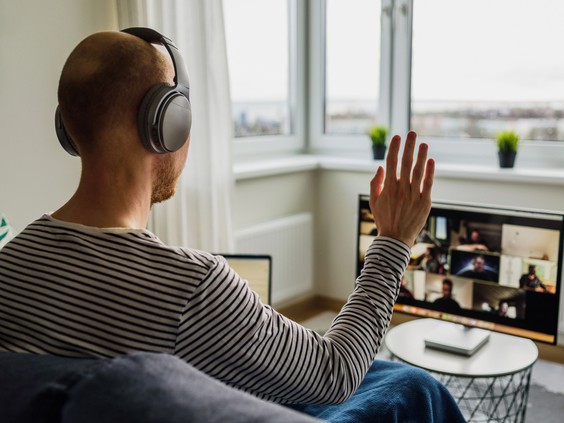
Employees Are Starting to Miss Office Benefits

Working full-time at home is now a bore for employees. It’s no surprise considering how most employees have been executing their day-to-day responsibilities at home for almost 2 years.

According to a survey conducted by the Rosslyn Business Improvement District, a business development agency, as the endemic continues, 70% of employees prefer to spend time in the office, while a third prefer to work from renting out coworking spaces, such as Airbnbs, and holiday homes. In the report, employees are feeling inclined to return to their workplaces by in-office privileges. 42% said coffee, food, and snacks would entice them to come back, 35% said comfortable furnishings would encourage them, and 33% said access to outdoor workstations would entice them.

“These insights are assisting us in determining how to meet the future of work by optimizing the new hybrid workplace and at the same time, balancing employee well-being and productivity,” said Mary-Claire Burick, the president of the Rosslyn BID, in a statement. “As the future of employment continues to shift, community leaders around the country are continually seeking effective solutions,” she states.

The routines and anxieties of the last 18 months have left people desiring variety, despite how working from home has gradually become more common. According to a Morning Consult poll, 31% of employees still prefer to work from home full-time, 45% prefer to stay in the office five days a week, and 24% want an equal split of work and home time. 

Approaches to Create Practical Workspace

Bryan Murphy, CEO of Breather, a private workspace provider, said the workplace may inspire productivity and cooperation even if employees only assemble a few times per week. Getting out of the rut of working from home could provide the lift that employees require. “Humans are naturally social beings, and no one wants to be alone all day, every day, not seeing other people,” Murphy says. “People want to be able to spend some peaceful time away from their families when they need to be extremely productive or make a client call.” Nevertheless, people will constantly crave the social aspect even in the comfort of working from home.

According to the Rosslyn BID poll, employees are open to new ways of working, especially if they have access to an outside workplace where they may communicate effectively. 76% of those surveyed thought working outside would increase productivity, and 86% said it would improve their mental health. With so many options and incentives available, companies should think outside the box when imagining what employment looks like today.

“Hybrid has taken on a new significance, and employees have more choice than ever, before in where they want to work,” Jennifer Burns, EVP of developer Monday Properties, said in a statement. “How we see hybrid working has a lot more to do with innovative, intelligent facilities than it does with home versus workplace. We have changed the way we design places depending on how they will be used in the future to create healthy, safe, and productive settings.” 

Employees Isolated at Home Face a Loyalty Crisis Due to Remote Work

Finding the ideal work-life balance can be difficult. Undermanaged remote employees may experience job frustration, burnout, or even fraud.

There is a saying that goes, “distance makes the heart grow fonder.” Perhaps it’s a matter of “out of sight, out of mind”? Long hours of forced remote working, be it from home or virtually elsewhere, have proved that for any group of employees, both can be true at times. 

Working from home during the outbreak weakened professionals’ relationships to the consultancies, law firms, or accounting companies that employed them, according to a recent Financial Times research. With most parts of the world finally loosening their lockdown, many have been actively job-hopping because candidates could now interact face to face with prospective employers.

A decrease in commitment toward employers

There are two sides to this situation. First, the seclusion of remote working decreases commitment to your current employer; second, the return of in-person interactions pushes you to establish a bond with a new one.

On the other hand, The Financial Services Culture Board’s efforts fall into the “absence makes the heart grow fonder” camp. Its 2020 study of thousands of Britain banking employees showed increases in scores for feedback, leaders’ transparency, and health.

These scores dipped significantly this year, although they remained higher than in 2019.  According to Jenny Robinson, a senior behavioural scientist at the FSCB, believes that employees may have felt more “equipped to utilize their judgment and autonomy” when working remotely.

Then there’s the Oliver Wyman Forum survey, which discovered that a drive for more flexibility and a better work-life balance, instead of a desire to return to the office, is significantly one of the reasons for resigning or wanting to leave a job, after the quest for earning more money. Finding the ideal work-life balance can be difficult. This is because disorganized management of remote employees may experience job frustration, burnout, or even fraud.

Another survey conducted this year by the Chartered Institute of Internal Auditors identified the potential of a “post-pandemic organizational cultural problem.” “How do employees maintain their strong attachment to the business, continue to experience the shared purpose, values, and sense of community within their organization, and maintain expected behaviours in the absence of the old workplace-in-person conversations?” asked Heli Mooney, Ryanair’s head of internal audit.

Returning to the office as a senior and new personnel

Depending on where your position is in the hierarchy, the office will either repel or attract you. Robinson distinguishes two “humps” that reflect senior management and junior subordinates or interns.

They are more eager to return to the office than the rest of the staff. “How much of a component of an organization does someone feel if their inclusion consists of a keyboard transfer in a parking lot?”, a manager told FSCB  what it meant to work in a company with “no unifying cultural aspects,”

“How much of a part of their organization does someone feel if their inclusion consists of a keyboard transfer in a parking lot?” 

According to the FSCB, there is a distinction between connection, which technology supports during the lockdown, and collaboration, which is rather challenging. It is difficult to recreate processes that bind in new hiring or junior personnel, such as desk-side learning from experienced employees, online. It’s one of the reasons why investment banks, which place a high value on such tactics, have led “back to the office” campaigns.

Changes influencing the current labour market

Indeed, the after-effects of the outbreak have changed most organizational cultures and their point of view. Kevin Rockmann, a management professor at George Mason University in Virginia, says it’s not unusual that this is causing ripple effects in the labour market. Not everyone who was delighted with their employment prior to the pandemic will be happy after it.

In a 2015 paper for the Academy of Management Discoveries magazine titled “Contagious Offsite Labor and the Lonely Office,” Rockmann and Michael Pratt of Boston College analyzed the unexpected implications of remote work at an unnamed technology company. One major finding was that once a percentage of employees preferred to work remotely, the quality of work in the office declined. Staff members felt “alone in a crowd, surrounded by many but not getting actual social contact in the on-site workplace,” thus many preferred to work off-site.

It’s a feeling where you’ve decided to return to the office anticipating meeting your colleagues only to find out that they’ve chosen to work from home on that day. 

Employers and employees, like their counterparts in 2015, may have to make choices as they try to reverse the flow of remote work, according to Rockmann. “This will cause some turbulence,” he predicts. It is acceptable to experiment, he argues, but businesses must eventually “stick their flag in the ground” and set clear working terms so that employees may choose whether or not to stay. “A lazy option is to choose an in-between model and bend over backward to accommodate everyone: the average level of discontent (with that approach) will be high.”

Needless to say, employers, and even personnel, may feel somewhat “homesick” for a cultural and management ideal that simply didn’t exist prior to the pandemic, according to Robinson of the FSCB. However, once the crisis fades, they will understand that corporate loyalty and cultures are determined less by where labour is performed but more by how it is performed, acknowledged, rewarded, and overseen. 

Working From Home: Benefits and Detriments

Getting up right before the meeting starts and joining the rest of your colleagues all while making a cup of coffee or perhaps, waiting for the toast to be done and then spending more time with the family later in the evenings: seemed like the work-life balance was actually possible and beneficial with this utopian dream.

After 18 months of the pandemic, studies and surveys present a more nuanced view of the psychological and physical effects of remote working.

One thing is for certain: working full time from home has received a boost from the pandemic across different parts of the world.

Statistics may have reduced since then in areas where vaccination rates have increased and infection rates have decreased, but they remain much higher than before the outbreak.

Ineffective communications

Through recent studies, there is an increase in providing evidence of the consequences of working from home, such as a Microsoft research published in the journal Nature Human Behavior. The technology powerhouse that commissioned the study will transition to remote work in March 2020. From December 2019 to June 2020, the study examined data and correspondence from about 61,000 employees.

Undoubtedly, while working from home has indeed increased productivity, communication and collaboration between departments decreased.

Employees, in particular, spent less time in direct one-on-one conversations and instead relied more on emails or text messages. According to the authors, this causes employees to become disconnected and obtain less knowledge to be shared, and ultimately, this could have a negative influence on output and creativity.

The study, according to Hannes Zacher, an industrial and organizational psychologist at the University of Leipzig, shows only one side of the coin.

“While the Microsoft analysis provides a somewhat passive perspective, there is also data that demonstrates that the opportunity to work from home may be favourably embraced by employees – but only within a limited framework.”

Practicing shift schedules

As a result, research shows that working from home one to two days each week is excellent for employee satisfaction and productivity. Think of it as shift work, for example, you’re coming into work twice or three times a week, and the next week you’ll work from home. This will also ensure that companies are able to keep the number of present employees in the office low to reduce the chances of spreading COVID-19.

It would be feasible to converse not only online but also face-to-face in such a framework.

“From a psychological perspective, a video call is still preferable compared to an email.” In the long term, however, it cannot replicate face-to-face talks, particularly when it comes to trusting each other, working strategically together, or resolving disagreements.”

Zacher began surveying over 1,000 workers on their physical and mental wellbeing at the end of 2019. The start of the pandemic turned it into a long research: participants have been polled regularly since March 2021. The psychologist gathered data on the effects of the corona pandemic on the working world.

“Extroverts were happier and more comfortable than introverts before the pandemic took place,” Zacher says. He claims that this time has been reversed.

“The situation was more stressful for extroverts, while introverts coped better.” Reserved individuals, in particular, find formats such as video calls more enjoyable. This is in relation to the silo mentality where individuals prefer not to share details with different divisions of the same company.

Simultaneously, Zacher and his colleagues observed that teams separated into subgroups more quickly – an observation that corresponds to one of the findings of Microsoft’s study.

“A potential fiasco between personnel in the office and those working from home,” he notes.

Management must guarantee that there are no emotions of unequal treatment in this situation.

“Managers need to be able to communicate and justify work structures in order to ensure that neither employee satisfaction nor corporate culture suffers.”

In all of the debate about remote working, it is vital to remember that the workplace is also a valuable resource: “The office works as the great leveler in which everyone has the same chances,” says Zacher.

When working from home, however, socioeconomic aspects come into play.

“Spouses without children in a spacious flat may certainly work better at home as opposed to single parents or younger employees, for example, who live in shared flats or smaller places.”
— Alice Lanzke/dpa

Hybrid Work Life: A Clash of Both Worlds

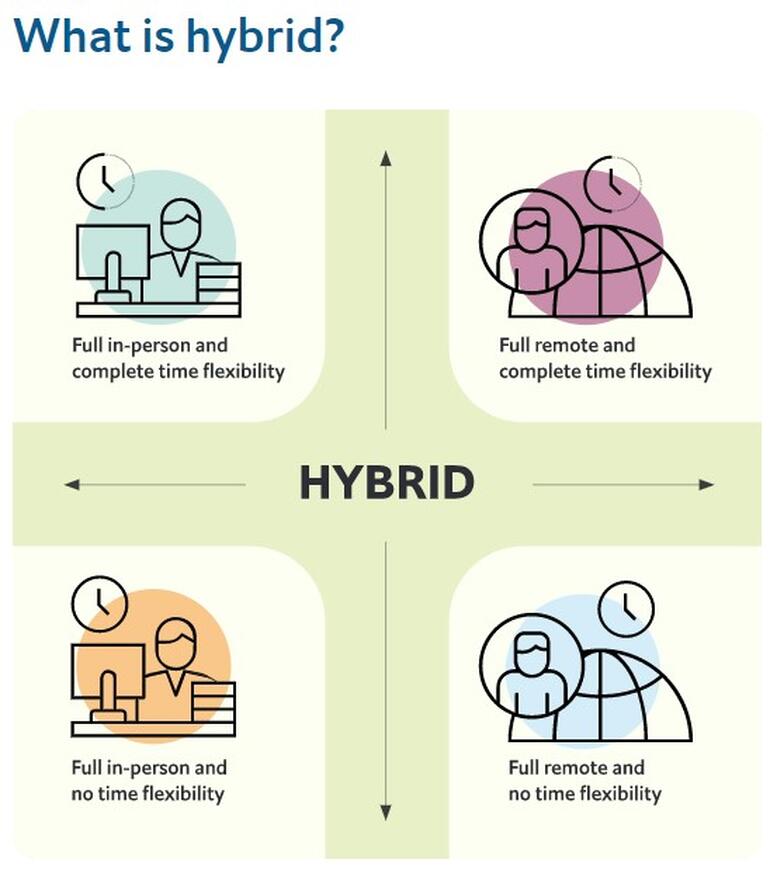
In a new report from Google Workspace, hybrid work means anything between full in-person work with limited time flexibility and full remote work with complete time flexibility.

Image: Google Workspace

Keeping in touch with colleagues while simultaneously working remotely can be trouble in some cases that may include Internet lagging, a decrease in networking between senior colleagues and newcomers, and a negative impact on mental health. Corporate worlds have been discussing whether remote work or all-in-person is better. Obviously, there’s a flip side to every coin. According to two new polls, businesses are gradually transitioning to hybrid. New research from Google Workspace and Kaspersky uncovers a plethora of inconsistencies in how individuals perceive hybrid work. A sizable number of employees prefer remote work, but another fraction is concerned about how to network in such an environment.

“Remote work appears to have improved my physical, social, and emotional well-being as an individual, but it has been affecting my relationship with the organization,” said Prasad Setty, vice president of digital work experience at Google Workspace.

For some employees, the trade-off is beneficial, according to the data by Kaspersky’s research, which found that 61% of employees do not feel secluded while working remotely. In addition, 37% of respondents stated communication with coworkers is better now than it was before the outbreak.

According to Setty, the poll found that just a tiny fraction of people are expected to be fully in the office or completely remote.

“75% expect hybrid to be the default option for us and the complications in the responses demonstrate people’s point of view and personal preferences,” he said.

The new task for leaders is to devise a collaboration tech stack that complements that balancing stack. Collaboration tools must be usable by all workers in all contexts. It’s a balancing act that necessitates fresh managerial abilities and a willingness to try new things. In 2022, there will be an aim to a balance between flexibility and efficiency for remote workers and networking and team development in person.

Here are some ideas from both reports that can be used to develop a hybrid plan for 2022.

The Formula to a Successful Hybrid

Views have altered to the point that the office is no longer the general place to perform work According to Google Workspace’s research, “Making hybrid work human”. The researchers cite the following explanations for this shift:

  • Some remote work experiments will bear fruit.
  • Setting up the technologies in-home office is more convenient now.
  • The public’s perception of remote work has been positively accepted.

There are three benefits of working in a flexible workspace. The top three benefits are an increase in productivity, good well-being, and alternative ways of working. On the other hand, the top two downsides of working from home, according to those who struggled with it, were productivity and welfare.

Several survey findings reflected this sense of disconnection:

  • 62% percent are concerned about their future job possibilities as a result of fewer opportunities to network and create relationships with senior leaders. 
  • 57% of respondents reported feeling detached from their workplace and colleagues.
  • 53% reported that lack of interactions have caused an impact on their mental health

The study was carried out by Economist Impact researchers and was sponsored by Google Workspace. There were 1,244 survey respondents from North America, Europe, APAC, and Latin America, representing more than 15 industries and both small and large enterprises. As stated in the report, hybrid work is defined as any combination of full in-person employment with limited time flexibility and full-time remote work with complete time flexibility.

Making Collaborative Tools Suitable for Hybrid Work

Based on the poll, according to Setty, demonstrates the necessity for collaborative tools and hybrid work arrangements to achieve these three criteria:

1) Work is no longer linked to a particular spot.

2) Time management is essential.

3) Autonomy, flexibility, and human connection are all required.

Google Workspace’s Companion Mode, considers hybrid settings, as having some participants in a conference room and others virtually joining.

“Participants in a conference room can use hand raises, make remarks, and participate in polls without interfering with everyone else through companion mode,” he explained.

Setty believes that defining clear targets and critical results on a quarterly basis is the key to success when introducing flexible work hours.

“That way, everyone knows who is going to do what and when the team will meet to go through everything,” he explained.

To adapt from the shift work to remote work with ease, Setty said he reduced his weekly, 90-minute staff meeting to two 30-minute sessions in order to have more opportunities to check in with his team.

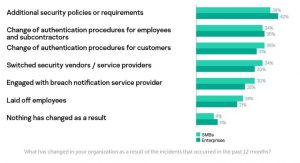
A survey by Kaspersky found that companies are using a variety of tactics to boost cybersecurity as many people continue to work from home.

Image: Kaspersky

A new survey found that most employees have successfully adapted to remote work. According to Kaspersky’s poll of 4,303, IT workers from 31 countries found that 61% of employees do not feel alone while working remotely. In addition, 37% of remote workers claimed they are communicating with their coworkers even better now. Nonetheless, a significant proportion — 39% of them feel secluded while working from home.

Based on the survey:

  • 54% percent of employees reported an increase in workload as a result of remote work.
  • 61% of employees reported no difference in communication with their teams while working remotely.
  • 80% of businesses have attempted to address employee burnout, while 45% have developed solutions that genuinely help to reduce workload.
  • 42% of SMBs and 43% of businesses have encountered IT security breaches.
  • 45% prefer not to publicly report disclosures of confidential employee info.

People continue to utilize non-corporate devices and services for everything from email to resource planning software to web-conferencing platforms, despite the fact that use of each of these services has increased by only approximately 3% in the last year. Respondents to the survey also mentioned the following security concerns about working remotely:

  • One of the most significant challenges, according to 42% of respondents, is a lack of end-user security culture.
  • 42% of firms have come across inappropriate usage of IT resources by employees.
  • 38% of businesses reported unauthorized data sharing via mobile devices.

In the report companies, Andrey Evdokimov, Kaspersky’s head of information security stated that firms must evaluate the worth of the information as well as the number of people who have access to it, in addition to precautionary measures.

“Breach of incidents are more prone to occur in businesses where a significant number of workers handle classified info that can be sold or used in some way. Change business operations if necessary, by lowering the number of people who have access to essential data, reducing the amount of data available to all employees, and making available information less enticing for theft (, eliminating the last digits of a credit card number, anonymizing data and so on).” As said by Evdokimov.